






Why Do Teeth Become Sensitive? Common Causes & Treatment
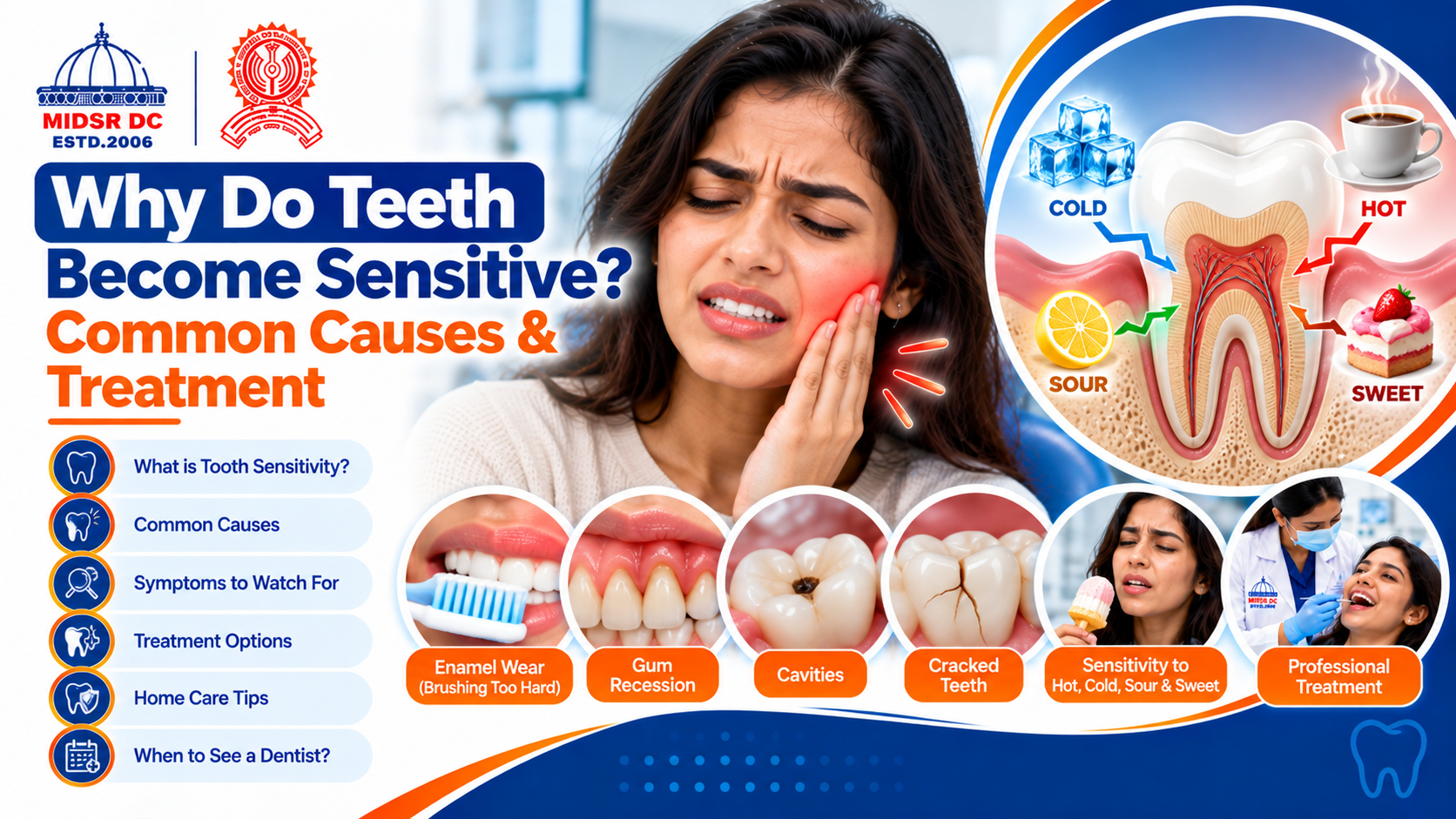
That sharp sensation when you drink hot chai or eat an ice cream cone? That is sensitivity of the teeth. And yes, it is very annoying.
However, there is one thing that people don’t understand. They think it is a problem; in reality, it is just a signal. It means that the protective layer of your teeth has become thinner, exposing your nerves. Using some toothpaste for sensitive teeth is indeed a temporary measure; it doesn’t solve the problem.
Let’s investigate the causes of tooth sensitivity, home remedies, and the situations when you need to visit a dental hospital in India.
Read More: Affordable Dental Treatments in Maharashtra
So what exactly happens with teeth?
Inside every tooth there is pulp (soft tissue with nerves and blood vessels) and dentin (series of tiny tubes with nerves inside). Enamel protects pulp and dentin.
But the problem is that enamel gets thinner or gums recede at some point and the teeth become exposed to hot, cold and sweet food.
Read More about Monsoon Dental Care Tips
8 Reasons Your Teeth Might Be Sensitive
What's Causing It | What's Happening | How It Feels | What To Do |
Enamel erosion | Acid from sodas, citrus, or acid reflux eats away enamel—about 0.2mm yearly in heavy soda drinkers | Quick zaps with cold drinks, sweets, or brushing near gums | Cut acidic drinks; rinse after; use fluoride or n-HAP toothpaste twice daily |
Gum recession | Gums pull back from gum disease, hard brushing, or age—exposes root dentin with no enamel | Sharp sting at gumline with cold air, brushing, or touch | Softer brush, gentler technique; bad cases need gum grafting |
Cavities | Bacteria drill through enamel into dentin—roughly 50% of Indian adults have them (2025 NFHS) | Pain in one tooth with sweets, cold, or pressure | Get a filling. Cavities don't fix themselves. |
Cracked tooth | Grinding, trauma, or hard foods create hairline fractures exposing dentin or nerve | Sharp, random pain when biting; hard to tell which tooth | Stop chewing there; see a dentist before it splits more |
Grinding at night | 1 in 3 Indians grind teeth while sleeping (2026 study)—wears enamel, creates micro-cracks | Dull ache across many teeth; worse in morning | Night guard + stress management; Botox for bad cases |
Recent dental work | Fillings, cleaning, or whitening irritate the nerve temporarily | Sensitivity peaks day 1-2, fades over 1-3 weeks | Desensitizing toothpaste; avoid very hot or cold stuff |
Too much whitening | Peroxide gels (10%+) open dentin tubes temporarily | Burning during or right after whitening; both sides hurt | Stop whitening 1-2 weeks; use weaker gels (5-7%) |
Brushing too hard | Hard bristles scrub wedge-shaped notches at tooth necks | Sensitivity right at the notch; you can feel it with your nail | Soft brush or electric with pressure sensor; gentle strokes |
To summarize, you should try home treatment for the next couple of weeks. If there is no improvement (or the situation worsens), go see a dental doctor at a dental clinic in Latur. The sooner you do something about it, the better.
Home Practices You Can Try
Nobody wants to run to a dentist with every single sign of pain. Therefore, there are a number of measures you can take:
Desensitizing toothpaste. Choose one that contains potassium salts, stannous fluoride, arginine, or nano-hydroxyapatite. Use it twice a day for 2 weeks. Do not rinse after spitting.
Fluoride mouthwash. It provides an additional level of protection. You can use it after brushing your teeth.
Softer brushing. Avoid using hard bristles when brushing. Choose an electric toothbrush with a pressure sensor.
Less acidic food and beverages. Citrus fruits, carbonated drinks, sport drinks, tomatoes, etc. should be avoided. After you consume such products, rinse your mouth and wait for about half an hour before brushing.
Tip: Nano-hydroxyapatite toothpaste (15-20%) when utilized is an excellent short term option for folks who suffer from mechanical sensitivity. Fluoride toothpaste on the other hand works much better long term in overcoming sensitivity to heat and cold. If both toothpaste options are available then use both of them.
When Should You Contact Experts
If you have done everything possible for 2-3 weeks and you still continue feeling pain then consult a dentist.
Fluoride varnish or gel. High-strength fluoride seals tubes and rebuilds enamel. One treatment lasts months.
Desensitizing agents. Professional oxalates, resins, or HEMA-glutaraldehyde bond to dentin and block pain.
Laser treatment. Diode laser plus fluoride gel cuts pain for up to 6 months. Works on stubborn cases.
Fillings or bonding. If decay, cracks, or old fillings are the issue, restorative work seals dentin for good.
Gum grafting. Bad recession? The surgeon moves tissue to cover exposed roots. Routine procedure works well.
Root canal. Last resort when nerve damage is irreversible. Nobody wants this, but sometimes it's necessary.
How To Avoid Sensitivity
The best solution is to avoid getting it.
Brush your teeth with toothpaste with fluoride or n-HAP two times a day: every day.
Floss every day. Gum disease can lead to gum recession. Gum recession leads to sensitivity.
Be careful with acidic food and drinks. Rinse your mouth after.
Use a night guard if you grind your teeth. If not sure, ask your spouse.
Go to the dentist for an examination regularly. Early detection will help you solve the problem beforehand.
Don't Just Tolerate It
Sensitivity can be treated. Home remedies work for little cases. For serious cases, you can come to a dental clinic in Maharashtra.
There are patients who are not able to drink cold water but after receiving treatment they can drink chai easily.
What is the difference? Diagnosis and treatment instead of using pain relief methods.
Make a consulting appointment with our dentist located in Latur.
Frequently Asked Questions
Can sensitive teeth heal on their own?
No. Enamel cannot regrow. However, if the sensitivity is mild, it could disappear in a few days or weeks with the proper precautions.
Which toothpaste should I use for sensitive teeth in India?
Any toothpaste containing potassium nitrate, stannous fluoride, arginine, or nano-hydroxyapatite is good enough. Sensodyne, Colagate Sensitive, and the n-HAP line is better.
Is tooth whitening associated with sensitivity?
Tooth whitening does not have to cause sensitivity. Peroxide formulas enhance dentin permeability. One should use low concentration and interval applications combined with desensitizing toothpaste.
When should I visit a dentist?
If the pain persists for more than two or three weeks, worsens, or is accompanied by cracks, decay, or receding gums.
Can the gums grow back after receding?
No. In mild cases, some gentle treatments and the use of desensitizing agents should be enough. In severe cases, grafting may be required.