






Dental Implants: How Long Do They Actually Last?
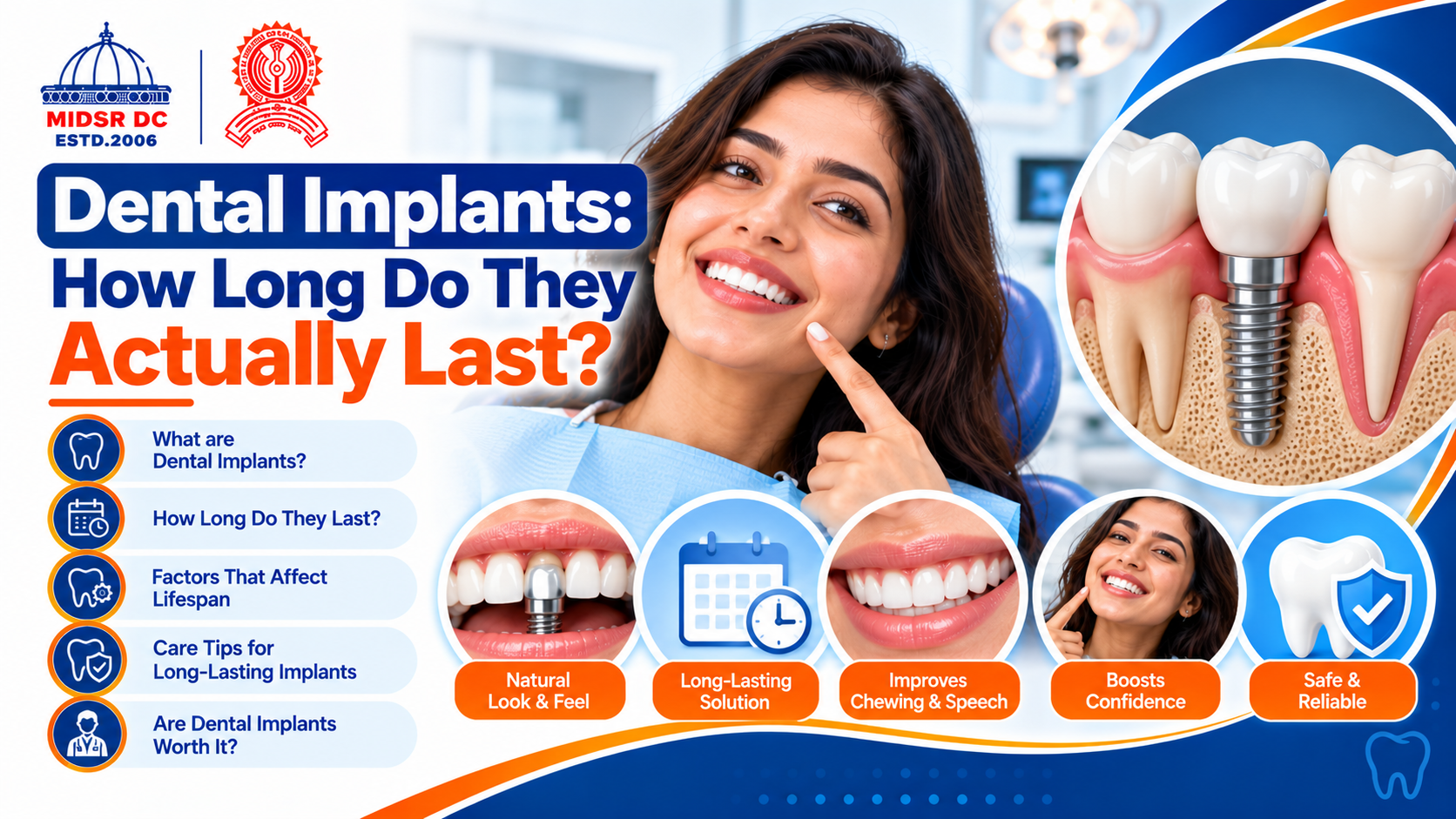
Choosing the dental implant is an important issue. There are steps to follow, there is a required procedure, and you will most probably have to pay more than for other variants. So the next obvious question is.
How long will it serve you?
In most cases, it takes quite some time for it to wear out. A titanium rod is likely to stay in the jaw for approximately 20 years. For some patients, it may successfully serve them throughout their lives.
However, one aspect needs to be mentioned. The dental implant is not only the visible part of the process. The actual implant is situated in the bone of the jaw. The visible part is called the crown, which is used for chewing purposes.
The lifespan of the visible part may differ from that of the implant.
Read More: Affordable Dental Treatments in Maharashtra
So what is the typical lifespan of an implant?
The lifespan of an implant varies from individual to individual. Reports indicate that outcomes are generally favorable. Some studies show that almost 95% of implants continue to function well even after a period of 10 years. In some cases, the implants last much longer than 20 years.
However, the treatment plan does not end with surgery. After the procedure, it is also necessary to keep your teeth and gums healthy. The lifespan of the implant depends to some extent from your individual habits as well. Smoking, bruxism, or inadequate oral hygiene can negatively affect the success of your implants.
In a nutshell, one’s oral hygiene practices can affect the viability of the implant long after it was placed.
The Implant May Stay, While the Crown Gets Replaced
Patients get surprised at this situation.
Consider this scenario. You have an implant placed and about 12 years later the dentist tells you that the crown needs replacement. This does not, however, imply that there is something wrong with the implant.
The crown undergoes intense pressure over years. Every day you bite and chew which leads to wear on the crown. A crown gets chipped, cracked or damaged in various ways.
In most cases, the crown can be replaced with a new one on the previous implant.
The titanium implant remains intact and functional.
So, as a general guideline, the implant is likely to last for about 20 years while the crown needs replacing after about 10-15 years.
Read More about Monsoon Dental Care Tips
What Can Shorten the Life of an Implant?
This is where your own habits make a difference.
Smoking
Smoking slows healing and can increase the risk of implant problems. If you smoke, tell your dentist honestly before treatment. They can plan the procedure and aftercare accordingly.
Poor oral hygiene
Implants do not get cavities like natural teeth, but plaque can still build up around them. This can cause gum inflammation and, in serious cases, bone loss around the implant - known as peri-implantitis. Brushing and cleaning between your teeth matter just as much after implant treatment.
Teeth grinding
Clenching or grinding your teeth puts extra pressure on the implant and crown. If you grind at night, your dentist may recommend a night guard to protect them.
Bone loss
An implant needs enough healthy bone to stay firmly in place. After losing a tooth, the jawbone can shrink over time. If there is not enough bone, a bone graft may be needed before the implant. This is why scans and proper planning are important.
Overall health
Your general health also affects healing. Conditions such as poorly controlled diabetes can slow recovery. This does not automatically rule out implants, but your dentist needs to know about your health before treatment.
What you might notice with a failing implant
Check with your dentist if you notice any of these:
Bleeding near the implant
Swelling around the implant
Pain when you chew
A crown that feels like it shifts
Bad taste that will not go away
Bad breath that stays
Gum changes near the implant
Any wobble in the implant or the restoration
Not every issue is in the implant. Sometimes the crown is the cause. Sometimes there is swelling or inflammation around the implant. Either way, it is worth getting checked early.
Dental implants do not call for anything overly complex
After you get one, your main job is simple: keep it clean and cared for
Brush your teeth in the morning and at night
Also clean between your teeth each day
Your dentist might suggest floss or an interdental brush
This depends on how the implant sits in your mouth
Try not to use the implant for tasks it was not made for
Do not bite down on things like ice, pens, or other hard items
Those can harm the crown
If you smoke, or if you clench or grind while you sleep, address it
Don't wait and hope it will not cause trouble
Book and attend your checkups
An implant can feel normal even when problems are starting
A dentist can notice early changes before you feel anything
Dental implants and age
Being 60, 65, or older does not automatically rule you out
Age is only one factor in the decision
Your dentist will review your jawbone and gums
They will also consider your health and how well you keep up with cleaning
When those parts look good, older adults can still get good results
Often the real question is not “Am I too old?”
It is “Is my mouth and health a good match for an implant?”
The Simple Answer
However, the years that the implant will last is just part of the story. Factors such as the quality of the procedure, the health of your gums and bones, how you take care of your teeth, the quality of your bite and whether you smoke affect the durability of a dental implant. Therefore, it is essential that you view an implant as a long-term asset and ensure that you take care of it so it does not fail prematurely.
Dental Implants at MIDSR Dental College, Latur
At the MIDSR Dental College in Maharashtra, implant care goes beyond the implant placement. After that, patients need a follow up for adequate care. The Oral and Maxillofacial Surgery department is closely working with the Prosthodontics department. They check the teeth and jawbone before the procedure starts.
What happens next varies on the patient’s mouth condition. Some patients need a CBCT scan to check the shape and density of their bones. If there’s insufficient bone, the team can opt for bone grafting.
Then they place the implant and create a restoration plan.
Most of the time, once the patient recovers, an implant-supported crown will be placed in the mouth.
The procedure will look different from one patient to another. One patient may be getting a replacement for a recently lost tooth. Another patient may have multiple missing teeth for many years.
Because of these differences, the examination must be done first. It is after the exam that the team will choose the treatment plan.
Frequently Asked Questions
Will a dental implant work forever?
Yes, it appears that a dental implant can function for an extended period of time, with certain individuals using theirs indefinitely. However, the dentist cannot guarantee that it will always provide service. Many things like the condition of gums, bone resorption, smoking, bruxism and general health play a crucial role in determining the longevity of an implant.
How often must an implant crown be replaced?
Here, we’re referring to the crown rather than the implant itself. Crown have an average lifespan of 10-15 years. However, there’s no specific period of time when a crown has to be replaced. Some crowns may last longer than others that require an early replacement due to deterioration.
Are implants stronger than natural teeth?
Implants may seem more stable as their function entails embedding into the bone for support, but they are more prone to damage. Proper maintenance is required for both implants and natural teeth. Excessive biting may also lead to damage of both of these.
Can a person have an implant if they smoke?
In certain cases, this can be true. Nevertheless, smoking makes it more likely for complications and hinders healing. Your dental office will be telling you about this. They may also recommend you to quit smoking or reduce smoking habits before and after getting an implant.
What to do if the implant fails?
Initially, the dentist analyzes the problem. It can be caused by infection, insufficient bone support, excess pressure, or issues with healing. After that, the next steps will vary according to the reason. You may require treatment, or else the implant may need to be expelled before proceeding with any further plans.