




Best Oral Hygiene Tips During Viral Infections: Don't Let Flu Wreck Your Smile
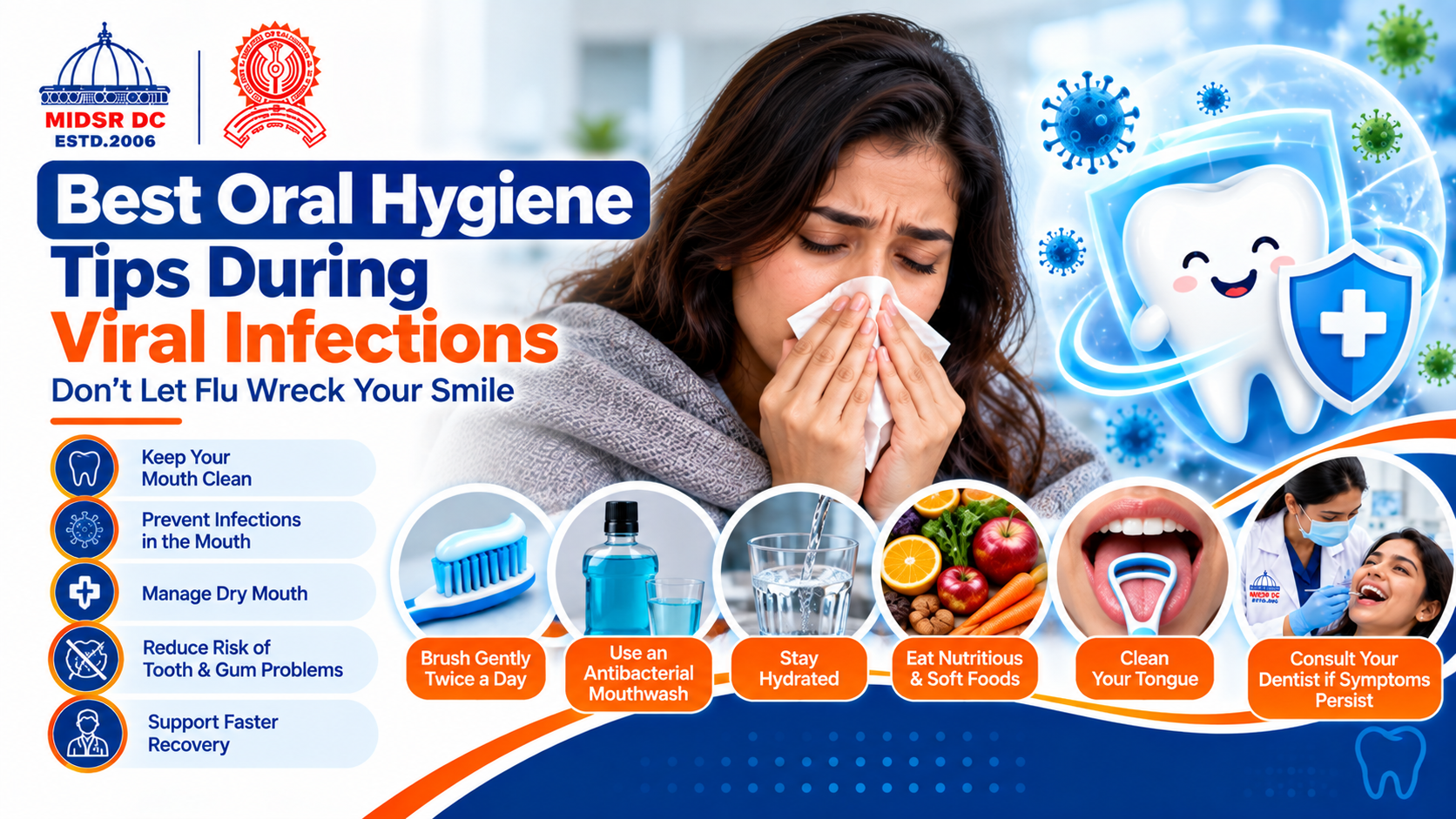
Nobody really says it, but being sick with the flu can mess up your teeth and gums fast. It is not the kind of injury you see on TV. It is the quiet kind.
When you feel wiped out, you skip brushing or do it badly. Your cough syrup is mostly sweet liquid. Then you start to feel better, and you notice new trouble. A fresh cavity may show up. Your gums might bleed more than usual. Your breath can get strong and hard to ignore.
This does not have to happen. You can protect your mouth while your body is already dealing with the flu.
Read More: Affordable Dental Treatments in Maharashtra
Why your mouth feels worse when you are ill
Your mouth is not just along for the ride while you are sick. It plays a part in what is going on.
Viruses can enter the body through the mouth. The immune system gets activated. The mouth has plenty of bacteria that must stay in equilibrium. When the immune system is weak, the equilibrium is disrupted.
The research work conducted between 2025 to 2026 shows oral dysbiosis. It means that the bacterial mix is changed. It is not only tied to cavities. It can also increase inflammation in the whole body and affect how you bounce back.
Here's what's working against you:
Dry mouth. Fever dehydrates you. Congestion forces mouth-breathing. The decongestants cause dehydration. This means that less saliva is produced which may lead to more bacteria, more acidity and subsequently more problems.
Sugar everywhere. Cough syrups. Lozenges. Even those "immune support" drinks. They're coated in fermentable carbs that feed the exact bacteria you're trying to keep in check.
Acid attacks. If you throw up (thanks to the stomach flu), your tooth enamel is exposed to gastric acid. It softens. It weakens. And if you brush right away, you're literally scrubbing it off .
Zero hygiene. Let's be honest—when you can barely lift your head, flossing isn't happening. Plaque doesn't care. It builds anyway.
Read More about Monsoon Dental Care Tips: Keep Your Smile Healthy This Rainy Season
7 Things That Actually Work When You're Too Sick to Care
1. Keep Water Close All Day
You hear it all the time. Still, it matters for your mouth. Saliva clears germs. It helps calm acid. When you have a fever, you can lose fluids faster than you think.
Put a bottle by your bed. Take small sips through the night and in the morning. Try not to lean on lots of coffee or tea since they can dry you out. If your mouth feels dry, drink more.
Fast option for sore days. Use sugar-free xylitol gum or lozenges. They boost saliva. They also help cut down cavity related bacteria. Keep a pack in your kit for sick days.
2. Check What Is Inside Your Cough Syrup
Honey and lemon syrup feels soothing. But it can be tough on teeth. It adds sugar that feeds germs in your mouth.
Many stores now sell sugar-free syrup. Some are made with sorbitol, xylitol, or stevia. The taste may feel the same, but you avoid extra sugar. Look at the label before you buy.
If you already took the sugared kind, rinse right after. Use plain water. Do not brush your teeth immediately if you have consumed acidic food/drink like citrus syrups or juices. Wait for about 20-30 min before brushing your teeth as your enamel acquires hardness during this waiting time.
3. Brush Even If You Feel Worse
You are tired. Your body hurts. You just want to lie down. I get it.
Still, plaque does not rest. Brush twice each day with soft bristles and fluoride paste. Use gentle strokes. Your gums may already be swollen. In case you have ulcers in the mouth, you should use a paste without SLS as sodium lauryl sulphate may cause the ulcers to become worse.
If you throw up, rinse your mouth using water or water mixed with baking soda (1 tsp in a glass of water). This helps calm the acid. Wait about 30 minutes before you brush. Your enamel will be safer.
4. Salt Water Gargling Is Not Just a Myth
Add a pinch of salt to lukewarm water. In a gurgling sound for about half a minute, expel the water from your mouth. Do this 3 to 4 times each day. It helps. Throat swelling can go down. The rinse calms sore spots. It also rinses away germs without the sharp feel some alcohol mouth rinses give. If you have mouth sores, this tends to be less harsh than many store rinses.
5. Replace Your Toothbrush After You’re Well
Your toothbrush can collect germs. Organisms that cause illness can persist on the bristles for a long time, so once you’re feeling better, just toss the toothbrush away and replace it with a new one. Put the new brush upright in an open holder. Let it dry in air. Do not share a holder with anyone in your home. Sharing can spread germs.
6. Help for Dry Mouth Caused by Meds
Some medicines can dry you out. These can lead to a dry mouth feeling. However, if you breathe through your mouth at night, you might consider getting a cool mist humidifier. Instead of using oral meds, try out saline nasal sprays instead. If these options don’t help, you could also test various artificial saliva and moisture gels available in drug stores.
7. Floss One Time Each Day
When you are sick, flossing can slip. But the gaps between your teeth still need care. Plaque often builds up fastest in those spots. A soft flossing once per day can clear bits of food. It also helps break up a bacterial film. If your gums bleed, do not quit. Bleeding often means the tissue is inflamed and still needs cleaning.
What Options to Consider for Eating
What you eat during recovery can impact your dental health in a positive or negative way.
Do:
Here are some examples of foods that will help you recover your health after being sick: soup, yogurt, oatmeal, fruits with high moisture content, smoothies.
Sugar-free products and medications containing xylitol.
Herbal tea and warm broth.
Avoid:
Sticky cough drops
Drinks with acid (citrus fruits, sports drinks) on softened teeth
Dry foods if there are ulcers or sores
When to Actually Call a Dentist
The majority of mouth problems that arise with viral infections take care of themselves as you get better. However, if you find yourself in any of these situations, don’t stick it out:
You are experiencing excruciating tooth discomfort or swelling that doesn’t diminish after two days.
You have dry mouth for weeks after the illness has gone away.
You have sores that remain for between 10 and 14 days.
You have bleeding gums that only get worse despite gentle treatment.
Ready to Take Control of Your Oral Health?
MIDSR, known as Best Dental College in Maharashtra , knows that to prevent a problem, you have to know about it first—and take action. You don’t have to suffer from flu symptoms or tooth decay to appreciate that the smallest changes in your daily habits can produce monumental differences.
There’s no need to wait until you feel bad to go to the dentist. Schedule an appointment now and visit professionals who care about your health and well-being.
👉 Set up an Appointment at MIDSR
Since it’s better for your smile to be a thriving one instead of just surviving one!
Frequently Asked Questions
Is it alright to brush my teeth if I have a fever?
Yes. A fever will not impede you from brushing. In fact, it may prove beneficial to brush while feverish. Be sure to use a soft brush and fluoride toothpaste. Take it easy and be gentle in your brushing technique and absorb the results. If you feel dizzy, don’t hesitate to sit down first.
How long will I have to wait to brush after vomiting?
Allow thirty minutes for your enamel to settle. Rinse your mouth thoroughly with pure water or water with some baking soda. After the enamel has calmed down, you may proceed to brush your teeth.
Are sugar-free sweets better for tooth health?
Most of the time, yes. Sugar-free products do not give as much of an opportunity for bacteria to have access to sugar. Some of them contain xylitol which can help stop bacteria from growing. Regular sweets are often just covered with sugar for a while.
Why do I have dry mouth after taking cold medicine?
You should try sips of water more regularly. You can also use a humidifier. In addition, remember to chew xylitol gums or eat lozenges. In case of a dry mouth persists, it’s better to consult a physician about alternatives to medications you are currently taking. You can consider using an OTC saliva producing product.
Should I check whether I need a new toothbrush after being sick?
Yes, because a toothbrush stays loaded with germs for a few days. That is why you should change your toothbrush after getting better, as it would contribute to you not being exposed repeatedly and help your mouth heal.